Showing posts with label texts. Show all posts

21 June, 2014

Kafka, o vegetariano que não comia peixes

De repente, ele começou a falar aos peixes nos seus tanques iluminados. “Agora, por fim, posso olhá-los em paz, porque já não os como.” Foi quando ele se tornou vegetariano rigoroso. Se nunca ouviram Kafka a dizer coisas deste género com os seus próprios lábios, é difícil imaginar quão simples e facilmente, sem qualquer afetação, sem o mínimo pingo de sentimentalismo – algo que lhe era  quase totalmente estranho  – ele as pronunciava.
(...)

Cavalos-marinhos, mais do que a maioria dos animais, inspiram estupefação – eles chamam nossa atenção para as assombrosas semelhanças e as diferenças entre cada tipo de criatura e todas as outras. Podem mudar de cor para se mesclar com o ambiente e bater suas nadadeiras dorsais quase tão rapidamente quanto um beija-flor bate suas asas. Devido ao fato de não terem dente ou estômago, a comida passa através deles quase num só instante, o que requer que eles comam o tempo todo. (Daí as adaptações, como olhos que se movem com independência e lhes permitem procurar presas sem mexer a cabeça.) Não são exímios nadadores; podem morrer de exaustão quando pegos mesmo por pequenas correntes, então preferem ancorar-se em algas marinhas ou corais, ou uns aos outros – eles gostam de nadar aos pares, ligados por seus rabos preênseis. Cavalos-marinhos têm rotinas complicadas para fazer a corte e tendem a se acasalar em noites de lua cheia, fazendo sons musicais enquanto isso. Vivem relações monogâmicas duradouras. O que talvez seja mais incomum, contudo, é o fato de ser o macho que carrega os filhotes por seis semanas. O machos ficam “grávidos”, não somente carregando, mas também fertilizando e nutrindo com secreções líquidas os ovos em desenvolvimento. A imagem dos machos dando a luz é sempre assombrosa: um líquido turvo irrompe da bolsa de gestação, e, como num passe de mágica, cavalos-marinhos minúsculos mas formados por completo aparecem de dentro dessa nuvem.

(...)

E sentia vergonha por ser humano: a vergonha em saber que vinte entre o número aproximado de 35 espécies de cavalos-marinhos classificadas no mundo estão ameaçadas de extinção porque são mortas “sem querer” na produção de frutos do mar. A vergonha pela matança indiscriminada, sem nenhuma necessidade nutricional, causa política, ódio irracional ou conflito humano insolúvel. Sentia-me culpado pelas mortes que minha cultura justificava com uma preocupação tão ténue quanto o sabor do atum em lata (os cavalos-marinhos estão entre as mais de cem espécies mortas como “captura acidental” na indústria moderna de atum) ou pelo fato de os camarões constituírem convenientes hors d’oeuvres (a pesca de arrastão do camarão devasta as populações de cavalos-marinhos mais do que qualquer outra atividade).

Jonathan Safran Foer

11 May, 2014

Sheep, a short story

-->
We had been walking for miles and I was starting to become tired, not only because my feet had started to ache but also because Joe could not stop talking. He was not like the other boys I knew from school. He seemed much more shy when he was with the other classmates. I don’t know why I decided to ask him where he was going after school. Now his trifling conversations were boring me. He was telling me about how he once got himself cut in a crevice on that very same spot where we were standing when he suddenly chuckled. He was starting to annoy me with his silly stories. ‘Here it was! See that crack over there on that rock? We were running from the shepherd when I suddenly fell and cut my hand.’
‘Why were even you running from a shepherd?’ I asked quickly, suspecting foul play. He did not answer right away, I think he was pondering if should tell me the reason or not. I harkened while he strode along the roadside. ‘Well, I was with the other guys from school and we kind of got mad at the sheep because they were so loud. We were trying to take a nap on the grass and they were really loud. One of the sheep just had had little lambs and you can’t imagine how loud they all were. So… You know Tom? Tom and me, we stifled one of the baby lambs…’
I was vexed and could not believe him. He kept going as if was a natural thing, explaining how he had deceived the shepherd when he found out one of the sheep had died. Then he started praising his own sagacity and his cunning behavior, because he had been much smarter than Tom. ‘You see, he does not even know how to trick somebody during a chase. I do!’ 

11.11.2008 
Mariana Agria

13 January, 2012

vegetating

Travel is fatal to prejudice, bigotry, and narrow-mindedness, and many of our people need it sorely on these accounts. Broad, wholesome, charitable views of men and things cannot be acquired by vegetating in one little corner of the earth all one's lifetime.
Mark Twain - Innocents Abroad

13 November, 2011

11 November, 2011

english homework

found this in the attic...


written on the 28th of May of 2010


1. Describe an object of your choice as detailed as possible (size, colour, use…)

A Thermomix is a very expensive cooking robot. In some countries it is called Bimby. It is produced by a company called Vorwerk. It has the size of a large cooking pan but it is much more than just a cookin pan. They are stainless steel recipients, which fit into a small plastic computerized machine, which is white and has buttons on the surface and a small electronic display. The Thermomix needs electricity in order to work and should be put in a flat surface in your kitchen, next to your working area. It is used for chopping, cooking and preparing food. It is expensive but it is probably one of the most unknown but really good products. I only discovered this invention because my sister bought one. At first I was very skeptical about it’s use, but then I saw it in action and realized how useful it really is. If you want to cook a soup, you literally just need to put all the desired vegetables and water in the recipient and press a button. The Thermomix has the ability to chop the vegetables aor blend them completely so it is your choice how creamy you want your soup to be. It cooks soup in a matter of 30 or 40 minutes, so in the end you have a regular soup. This is very useful especially if you have children and want the least amount of effort while cooking for them. If you want to bake a cake the robot can also do it. And if you want to have a lemonade, you only need to throw in there the whole lemons, sugar and water and pressing a button Before serving you only need to filter out the skin that is lying on the bottom of the pan, and voila there you have your lemonade in 10 seconds.

2.Characterize a person of your choice (try to use as many adjectives as possible)

My best friend is a tall and quite handsome man. He has a big scar on his face since he was little, because he was hit by a horse in his childhood. He is funny and is always, or mostly in a good mood. He is in fact so positive, that since I met him I realised how I started avoiding negative people, and discovered that I am most happy around positive thinkers and optimistic minds like the one that my friend is. He is altruistic and giving. I never witnessed a moment of egoism from his side, which is something I admire deeply. When I met him, he was young and maybe a little foolish, but the more he grew up and the more he got older, the more I realised that he was becoming an admirable personality with treits I could look up to. He is not only someone that makes me smile and makes me happy, he is someone who inspires me to become better. He is gifted and talended in certain things, which I am not sure that he knows about. He is also very intelligent and caring. His flaws are mainly lazyness and impatience.

3.On a cold winter’s day in New York City in December, Joan decided to wake up early to do Christmas shopping. She got up, brushed her teeth energetically and washed her face quickly with warm water. She had only slept five hours that night, like in the last few years since her husband had died. She brushed her hair slowly and got dressed. She gave food to her cat that was still sleeping near the heating device and she got her coat and then left her apartment. After walking outside for a few blocks, she bought coffee to go and drank it on the subway. She hadn’t had a coffee in months, but today it was a special day. She also needed the extra energy to get though all of the things she wanted to do. The subway ride was forty minutes, so she scribbled on a piece of paper what she wanted to buy. She wrote the names of the people and what she had in mind as a gift. Next to the names she also noted a budget limit per person. Joan had always been very organized. She decided to go to the shopping mall, where she knew she would be warm. She bought the first presents in a clothing store for men. She bought a tie and a pair of socks but she couldn’t decide if she also wanted to by a shirt or not, as well. Then she bought flowers and a scarf. She also went to a bakery and bought two different low-calories cakes and three boxes of chocolates. Carrying all of the bags she made her way back home. When she got back she laid everything on the table and looked at it for a while. She had made it. She had bought all that she wanted and she decided it was now time to pack everything in nice festive packaging and bring the presents to the ones she loved. Her cat was sitting on the table looking at all those presents; he looked amused.
Joan got her white uniform out of the closet, dressed it over her dress and took all the presents in bags to the door. Then she fetched a glass of milk from the fridge, drank it leaving a sip or two for her cat. She put her winter coat and gloves on and left the apartment once again. Joan felt cold. She had not eaten anything all day, but she was saving all of her hunger for the feast later that evening. She had made it on time. She had the afternoon and the night shift today. She greeted the co-workers at the entrance of the building. Joe the supervisor told her that it Mr. Smith was being picked up later that evening, other than him everyone else would be present at the Christmas dinner.
Joan felt really happy. When she went up to the fest room she felt delighted. Her co-workers had done a brilliant job decorating the room. The first few members of the audience had already been brought to the room in their wheelchairs. She greeted Mr. and Mrs. Navajo and handed her the chocolate box and him the tie. Then she greeted Mr. Carusi and gave him the pair of socks. They were very happy and thanked her for the gifts very much. She put the two cakes on the table and thought to herself, “This Christmas is going to be wonderful for all of us, even if they have to spend it without their families in a nursing home”.

Wörter lernen in einer Fremdsprache

Wörter lernen in einer Fremdsprache

Die Globalisierung erfordert Fremdsprachenbeherrschung in fast jedem Beruf, es wäre daher besser für jeden berufstätigen Menschen in den Fremdsprachen eine besonders gute Kenntnis von Vokabular zu haben.
Wenn man Fremdsprachen lernt hilft es eine spezifische Methode zu haben, die für das lernende Individuum funktioniert. Viele Menschen lernen besser durch das Auswendiglernen von Wörtern, andere schauen sich lieber Bilder an und hören sich gleichzeitig an die passende Erklärungen und Aussprache dazu. Andere Menschen reisen ins Ausland und gewöhnen sich an die Sprache sehr schnell und lernen durch das alltägliche Leben die Lexik und gleichzeitig aber auch wie die Fremdsprache funktioniert. Die Methode, die am meistens Disziplin erfordert ist die Durchführung von Vokabellisten, beziehungsweise von Karteikarten mit Wörter, die man jeden Tag sich anschauen soll um neue Wörter zu erwerben und sie sich zu merken.
Besonders wichtig beim lernen einer Fremdsprache ist es für die eher fortgeschrittene Menschen, immer weiter an der Sprache arbeiten, sodass man nicht stagniert und im selben Sprachniveau bleibt. Man sollte dafür mit Texte arbeiten; Zeitungsartikel und ähnliches zum Beispiel auch: wichtig ist es in der Fremdsprache zu lesen und ab und zu auch zu sprechen, wenn möglich. Viele Verlage bieten Interaktive CDs mit Lernkurse und Übungen, die viel helfen.

31 May, 2011

HETEROTOPIAS


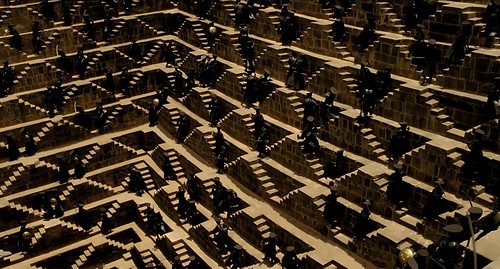
image from the movie The Fall from director Tarsem Singh

HETEROTOPIAS by M. Foucault

First there are the utopias. Utopias are sites with no real place. They are sites that have a general relation of direct or inverted analogy with the real space of Society. They present society itself in a perfected form, or else society turned upside down, but in any case these utopias are fundamentally unreal spaces.

There are also, probably in every culture, in every civilization, real places - places that do exist and that are formed in the very founding of society - which are something like counter-sites, a kind of effectively enacted utopia in which the real sites, all the other real sites that can be found within the culture, are simultaneously represented, contested, and inverted. Places of this kind are outside of all places, even though it may be possible to indicate their location in reality. Because these places are absolutely different from all the sites that they reflect and speak about, I shall call them, by way of contrast to utopias, heterotopias. I believe that between utopias and these quite other sites, these heterotopias, there might be a sort of mixed, joint experience, which would be the mirror. The mirror is, after all, a utopia, since it is a placeless place. In the mirror, I see myself there where I am not, in an unreal, virtual space that opens up behind the surface; I am over there, there where I am not, a sort of shadow that gives my own visibility to myself, that enables me to see myself there where I am absent: such is the utopia of the mirror. But it is also a heterotopia in so far as the mirror does exist in reality, where it exerts a sort of counteraction on the position that I occupy. From the standpoint of the mirror I discover my absence from the place where I am since I see myself over there. Starting from this gaze that is, as it were, directed toward me, from the ground of this virtual space that is on the other side of the glass, I come back toward myself; I begin again to direct my eyes toward myself and to reconstitute myself there where I am. The mirror functions as a heterotopia in this respect: it makes this place that I occupy at the moment when I look at myself in the glass at once absolutely real, connected with all the space that surrounds it, and absolutely unreal, since in order to be perceived it has to pass through this virtual point which is over there.

(...)

Brothels and colonies are two extreme types of heterotopia, and if we think, after all, that the boat is a floating piece of space, a place without a place, that exists by itself, that is closed in on itself and at the same time is given over to the infinity of the sea and that, from port to port, from tack to tack, from brothel to brothel, it goes as far as the colonies in search of the most precious treasures they conceal in their gardens, you will understand why the boat has not only been for our civilization, from the sixteenth century until the present, the great instrument of economic development (I have not been speaking of that today), but has been simultaneously the greatest reserve of the imagination. The ship is the heterotopia par excellence. In civilizations without boats, dreams dry up, espionage takes the place of adventure, and the police take the place of pirates.

Source: http://foucault.info/documents/heteroTopia/foucault.heteroTopia.en.html

21 November, 2010

a vantagem de ser bobo é ter boa-fé

"O bobo, por não se ocupar com ambições, tem tempo para ver, ouvir e tocar no mundo. O bobo é capaz de ficar sentado quase sem se mexer por duas horas. Se perguntado por que não faz alguma coisa, responde: "Estou fazendo. Estou pensando."

Ser bobo às vezes oferece um mundo de saída porque os espertos só se lembram de sair por meio da esperteza, e o bobo tem originalidade, espontaneamente lhe vem a idéia.

O bobo tem oportunidade de ver coisas que os espertos não vêem. Os espertos estão sempre tão atentos às espertezas alheias que se descontraem diante dos bobos, e estes os vêem como simples pessoas humanas. O bobo ganha liberdade e sabedoria para viver. O bobo nunca parece ter tido vez. No entanto, muitas vezes, o bobo é um Dostoievski.

Há desvantagem, obviamente. Uma boba, por exemplo, confiou na palavra de um desconhecido para a compra de um ar refrigerado de segunda mão: ele disse que o aparelho era novo, praticamente sem uso porque se mudara para a Gávea onde é fresco. Vai a boba e compra o aparelho sem vê-lo sequer. Resultado: não funciona. Chamado um técnico, a opinião deste era de que o aparelho estava tão estragado que o conserto seria caríssimo: mais valia comprar outro. Mas, em contrapartida, a vantagem de ser bobo é ter boa-fé, não desconfiar, e portanto estar tranqüilo. Enquanto o esperto não dorme à noite com medo de ser ludibriado. O esperto vence com úlcera no estômago. O bobo não percebe que venceu.

Aviso: não confundir bobos com burros. Desvantagem: pode receber uma punhalada de quem menos espera. É uma das tristezas que o bobo não prevê. César terminou dizendo a célebre frase: "Até tu, Brutus?"

Bobo não reclama. Em compensação, como exclama!

Os bobos, com todas as suas palhaçadas, devem estar todos no céu. Se Cristo tivesse sido esperto não teria morrido na cruz.

O bobo é sempre tão simpático que há espertos que se fazem passar por bobos. Ser bobo é uma criatividade e, como toda criação, é difícil. Por isso é que os espertos não conseguem passar por bobos. Os espertos ganham dos outros. Em compensação os bobos ganham vida. Bem-aventurados os bobos porque sabem sem que ninguém desconfie. Aliás não se importam que saibam que eles sabem.

Há lugares que facilitam mais as pessoas serem bobas (não confundir bobo com burro, como tolo, como fútil). Minas Gerais, por exemplo, facilita ser bobo. Ah, quantos perdem por não nascer em Minas!

Bobo é Chagall, que põe vaca no espaço, voando por cima das casas. É quase impossível evitar o excesso de amor que um bobo provoca. É que só o bobo é capaz de excesso de amor. E só o amor faz o bobo.

Das Vantagens de Ser Bobo - Clarice Lispector

27 January, 2010

Elfriede Jelinek - Die Liebhaberinnen


auszug S.14f:
"am beispiel paula"

"am beispiel paula. paula ist vom lande. das landleben hat sie bis jetzt in schach gehalten – ebenso wie ihre schwestern erika und renate, die verheiratet sind. die beiden kann man schon abschreiben, es ist genauso, als ob sie nicht auf der welt wären. mit paula ist das anders, sie ist die jüngste von ihnen und noch richtig auf der welt. sie ist 15 jahre alt. sie ist jetzt alt genug, um sich überlegen zu dürfen, was sie einmal werden möchte: hausfrau oder verkäuferin. verkäuferin oder hausfrau. in ihrem alter sind alle mädchen, die so alt sind wie sie alt genug, um sich zu überlegen, was sie einmal werden wollen. die hauptschule ist beendet, die männer im dorf sind entweder holzarbeiter oder sie werden tischler, elektriker, spengler, maurer oder sie gehen in die fabrik oder sie versuchen tischler, elektriker, spengler, maurer oder fabrikarbeiter und gehen dann doch in den wald und werden holzarbeiter. die mädchen werden ihre frauen. der jäger ist ein besserer beruf, er wird von auswärts importiert. lehrer und pfarrer gibt es nicht, das dorf hat keine kirche und keine schule. auch der intelligenzberuf des konsum-filialleiters wird von auswärts importiert, unter ihm arbeiten immer drei frauen und mädchen aus dem dorf und ein lehrmädchen aus dem dorf. die frauen bleiben bis zu ihrer heirat verkäuferin oder hilfsverkäuferin, wenn sie geheiratet worden sind, ist es aus mit dem verkaufen, dann sind sie selbst verkauft, und die nächste verkäuferin darf an ihre stelle rücken und weiterverkaufen, der wechsel geht fliegend vor sich.
so ist im laufe der jahre ein natürlicher kreislauf zustandegekommen: geburt und einsteigen und geheiratet werden und wieder aussteigen und die tochter kriegen, die hausfrau oder verkäuferin, meist hausfrau, tochter steigt ein, mutter kratzt ab, tochter wird geheiratet, steigt aus, springt ab vom trittbrett, kriegt selber die nächste tochter, der konsumladen ist die drehscheibe des natürlichen kreislaufs der natur, in seinem obst und gemüse spiegeln sich die jahreszeiten, spiegelt sich das menschl. leben in seinen vielen ausdrucksformen, in seiner einzigen auslagenscheibe spiegeln sich die aufmerksamen gesichter seiner verkäuferinnen, die hier zusammengekommen sind, um auf die heirat und das leben zu warten. die heirat kommt aber immer allein, ohne das leben. so gut wie nie arbeitet eine verheiratete frau im geschäft, außer der mann ist gerade arbeitslos oder schwerverletzt. alkoholiker ist er immer."

lost and not yet found

once upon a time there was a girl. much like any other girl she had fallen in love, or so she thought. she knew nothing about It. she had sought all over for It and when she thought she had found It, she satisfied herself with the choice she had made.
sometimes she thought this is not as nice as It is in fairy tales, but well much like any other thing, a woman deals with it.
one day The real thing came uninvited. he did not look at all like she had expected. she had been wrong all along. she sees that now. at the time she refused to let in the unexpected guest. she made him wait outside and thought it would make It go away. He did. It didn't.

M.A.

Kiss me at the Gate - a beautiful song by The New Monarchs

07 September, 2008

"As mulheres têm fios desligados"

"As mulheres têm fios desligados"
por António Lobo Antunes


«Há uns tempos a Joana
-Pai, acabei um namoro à homem
Perguntei como era acabar um namoro à homem e vai a miúda
- Disse-lhe o problema não está em ti, está em mim
O que me fez pensar como as mulheres são corajosas e os homens cobardes. Em primeiro lugar só terminam uma relação quando têm outra. Em segundo lugar são incapazes de
-Já não gosto de ti
de
-Não quero mais
chegam com discursos vagos, circulares
-preciso de tempo para pensar
-não é que não te ame, amo-te, mas tenho de ficar sozinho umas semanas
Ou declarações do género de
-Tu mereces melhor do que eu
-Estive a reflectir e acho que não te faço feliz
-Necessito de um mês de solidão para sentir a tua falta
e aos amigos
-Dá-me os parabéns que lá me consegui livrar da chata
-Custou mas foi
-Amandei-lhe aquelas lérias do costume e a gaja engoliu
-Chora um dia ou dois e passa-lhe
e pergunto-me se os homens gostam verdadeiramente das mulheres. Em geral querem uma empregada que lhes resolva o quotidiano e com quem durmam, uma companhia porque têm pavor da solidão, alguém que os ampare nas diarreias, nos colarinhos das camisas e nas gripes, tome conta dos filhos e não os aborreça. Não se apaixonam: entusiasmam-se e nem chegam a conhecer com quem estão. Ignoram o que ela sonha, instalam-se no sofá do dia a dia, incapazes de introduzir o inesperado na rotina, só são ternos quando querem fazer amor e acabado o amor arranjam um pretexto para se levantar
(chichi, sede, fome, a janela de que esqueceram de fechar o estore )
ou fingem que dormem porque não há paciência para abraços e festinhas, pá, e a respiração dela faz-me comichão nas costas, a mania de ficarem agarrados à gente, no ronhónhó, a mania das ternuras, dos beijos, quem é que atura aquilo? Lembro-me de um sujeito que explicava
-O maior prazer que me dá ter relações com a minha mulher é pensar que durante uma semana estou safo
e depois pegam-nos na mão no cinema, encostam-se, colam-se, contam histórias sem interesse nenhum que nunca mais terminam, querem variar de restaurante, querem namoro, diminutivos, palermices e nós ali a aturá-las. O Dinis Machado contava-me de um conhecedor que lhe aclarava as ideias
-As mulheres têm os fios desligados
e um outro elucidou-me que eram como os telefones: avariam-se sem que se entenda a razão, emudecem, não funcionam e o remédio é bater com o aparelho na mesa para que comecem a trabalhar outra vez. Meus Deus, que pena me dão as mulheres. Se informam
-Já não gosto de ti
se informam
-Não quero mais
aí estão eles a alterarem a agressividade com a súplica, ora violentos, ora infantis, a fazerem esperas, a chorarem nos SMS a levantarem a mãozinha e, no instante seguinte, a ameaçarem matar-se, a perseguirem, a insistirem, a fazerem figuras tristes, a escreverem cartas lamentosas e ameaçadoras, a entrarem pelo emprego dentro, a pegarem no braço, a sacudirem, a mandarem flores eles que nunca mandavam flores, a colocarem-se de plantão à porta dado que aquela puta há-de ter outro e vai pagá-las, dispostos a partes-gagas, cenas ridículas, gritos. A miséria da maior parte dos casais, elas a sonharem com o Zorro, Che Guevara ou eu, e eles a sonharem com o decote da vizinha de baixo, de maneira que ao irem para a cama são quatro: os dois que lá se deitam e os outros dois com quem sonham. Sinceramente as minhas filhas preocupam-me: receio que lhes caia na sorte um caramelo que passe à frente delas nas portas, não lhes abra o carro, desapareça logo a seguir por chichi-sede-fome-persiana-mal-descida-e-os-ladrões-percebes, não se levante quando entram, comece a comer primeiro e um belo dia
(para citar noventa por cento dos escritores portugueses)
-O problema não está em ti está em mim a mexerem a faca na mesa ou a atormentarem a argola do guardanapo, cobardes como sempre. Não tenho nada contra os homens até gosto de alguns. Dos meus amigos. De Schubert. De Ovídio. De Horácio, de Virgílio. De Velásquez. De Rui Costa. De Einzenberger. Razoável, a minha colecção. Não tenho nada contra os homens a não ser no que se refere às mulheres. E não me excluo: fui cobarde idiota, desonesto.
Fui
(espero que não muitas vezes)
rasca. Volta e meia surge-me na cabeça uma frase de Conrad em que ele comenta que tudo o que a vida nos pode dar é um certo conhecimento dela que chega tarde de mais. Resta-me esperar que ainda não seja tarde para mim. A partir de certa altura deixa de se jogar às cartas connosco mesmos e de fazer batota com os outros. O problema não está em ti está em mim, que extraordinária treta. Como os elogios que vêm logo depois: és inteligente, és sensível, és boa, és generosa, oxalá encontres etc., que mulher não ouviu bugigangas destas? Uma amiga contou-me que o marido iniciou o discurso habitual
-Mereces melhor que eu
levou como resposta
-Pois mereço. Rua.
Enfim, mais ou menos isto, e estou a ver a cara dele à banda. Nem uma lágrima para amostra. Rua. A mesma lágrima para amostra. Rua. A mesma amiga para uma amiga sua
-O que faço às cartas de amor que me escreveu?
e a amiga sua
-Manda-lhas. Pode ser que lhe façam falta.
Fazem de certeza: é só copiar mudando o nome. Perguntei à minha amiga
-E depois de ele se ir embora?
-Depois chorei um bocado e passou-me.
Ontem jantámos juntos. Fumámos um cigarro no automóvel dela, fui para casa e comecei a escrever isto. Palavra de honra que na janela uma árvore a sorrir-me. Podem não acreditar mas uma árvore a sorrir-me.»

Crónica de António Lobo Antunes publicada na Visão nº 804 de 31 de Julho de 2008

29 August, 2008

Limerick (exercise)

I had to write a limerick to present in an english class
I researched a little and came up with this:


At the window was a cat wearing a hat
At the window that’s where she sat
But her owner was furious
Because passersby were curious
Since they had never seen such a wonderful hat.

written in
June 2008
M. A.

Writing Exercise in English

Draft
Dorothy Crowfoot Hodgkin an example of persistence

Dorothy Mary Crowfoot Hodgkin was a British chemist in the 20th century. Her extensive work, as a researcher is admirable and inspiring not only for chemists, or researchers but for everyone. She specialized in the determination of molecular structures and made important discoveries about very important biomolecules throughout her life.

Already as an undergraduate student by the end of the 1920’s, Dorothy started dedicating her time to the study of the structure of organic compounds. She had had the idea of using x-rays on her research and finally had success using x-ray diffraction crystallography, a technique in which she was a pioneer. Through this technique she was able to determine the molecular structure of various biomolecules, for which she received several awards. The determination of the structure of insulin was one of her most important and deserved achievements.

Hodgkin’s research with the x-ray crystallography method is remarkable; this technique is a specific x-ray procedure that involves the targeting and beaming of x-ray radiation onto crystals, in order to obtain structural patterns and images through the observation of the diffraction of the radiation beams. The initial problem is that most of the compounds that Dorothy was interested in studying, for example proteins, do not occur naturally as crystals, so she first had to crystallize the proteins and other molecules, a process that can take days, weeks or even months. Only then can the work on the diffraction-based imaging begin, this technique involves the painstaking analysis of various diffraction-produced patterns and the comparison with other structural models, a work that is easily done by computers nowadays.

After the birth of her first child, Dorothy had an infection that left her hands swollen and distorted. Because of this she developed chronic rheumatoid arthritis at the age of 28. However she continued her work and research, which involved the delicate manipulation of the microscopic crystals needed to carry out the x-ray diffraction procedure.
Her persistence on working with this complex method would turn out to be decisive in her research; the constant improvements in this specific x-ray technique, along with her dedication allowed Hodgkin to show the world for the first time the 3-D structure of a various number of important biomolecules. She began by discovering the structure of larger molecules, such as cholesterol, penicillin and the vitamin B12; for the discovery of the last two she was awarded the Nobel Prize of Chemistry. The discovery of these structures contributed in a great deal to other disciplines, such as biology and medicine as well.

Dorothy also discovered the structure of insulin in 1969, which she considered her most important achievement, and in a way it was the most deserved.
Since the beginning of her research in the 1930’s Dorothy had worked and tried to discover the structure of insulin. At the time the x-ray diffraction was not as pure and clear as it is today, the x-ray producing equipment was not as good and did not produce such refined results. So besides insulin being so small and having such a structural complexity, the technology at the time was not advanced enough and made it impossible for Dorothy to achieve her goal. Dorothy had to wait 35 years to see the structure of insulin for the first time, for her it was a very fulfilling moment.

Dorothy’s life and work are an inspiration for anyone, her contribute as a chemist to the world was important. Even for someone who does not know much about chemistry or biology will understand the importance of the comprehension of molecules such as insulin, cholesterol, and penicillin. This knowledge had direct impact on the way we understand diseases such as diabetes, for example.

writing exercise in german

Ich befinde mich wieder auf der dunklen Gasse und verstehe, ich muss wieder zurück. So. Ich finde dieses Haus nicht. Ich verstehe einfach diese Adresse nicht. Nummer 23. Ich hatte sogar zweimal gefragt, welche Nummer es war. Tor 23. Dann geradeaus. Links und rechts mehrere Türen. Große schöne Türe aus Holz. Bei ganz wenig Licht versuche ich die Nummer 9 zu finden, das dritte Mal. Ich fühle mich komisch hier. Es ist so ruhig. Der Boden ist nass von dem Regen. Man hört kein Geräusch außer einem konstanten Rauschen von Autos in der Ferne. Ich sehe eine Bank und möchte mich dort hinsetzen. Muss sicher nass sein, aber egal. Ich setze mich und fange an nachzudenken, was ich tun soll. Also die Tür 2 und 3 sind da. Fehlt also die Tür Nummer 1. Noch komischer, aber egal. Ich muss doch nicht mich auf die Fehler irgendeines Ingenieurs konzentrieren, ich möchte nur die Tür Nummer 9 finden. 4 und 5 sind auch noch zu sehen. Aber die 6 und 7 sind in einem kleineren Seitenhof, sowie 8. Also die Tür 9 müsste auch dort sein, aber nein. Der Architekt wollte es kompliziert machen. Muss unbedingt eine Frau gewesen sein, die dieses Gebäude geplant hat. Ach, ich kann es nicht mehr aushalten hier zu sitzen. Es wird langsam zu kalt, und hier werde ich sicher nichts finden. Los. Gerade aus und rechts. Dann wieder zurück. Dann links. Dann zurück. Dann bis zum anderen Tor. Tür 12, 13, 14, 16. Ha! Tür 15 fehlt auch noch. Hm. Verstehe es echt nicht. Ich bin plötzlich nicht mehr ruhig, sondern sage es auch: „Ich kapiere es nicht. Wo ist sie, verdammt.“ Und dann plötzlich höre ich jemand. „Was suchen Sie denn?“ Na endlich! Dachte schon, niemand wohnt hier. Es ist ein Junge, muss ungefähr 14 sein. Ich antworte so höflich wie möglich und versuche meine Frustration zu verstecken. Er schaut um sich herum und sagt nur „’Tschuldigung, weiß selber auch nicht!“ Wie erwartet. Niemand kennt in so einer Großstadt seine Nachbarn, wieso sollte denn so ein Teenager überhaupt die Tür Nummern auswendig können. Doch, wenn er wie normale Kinder draußen spielen würde, schon! Aber ja... die Jugend von heute verbringt die Zeit meistens vor dem PC, also kann ein Junge, der hier seit 14 Jahren wohnt, gar nicht wissen, wo sich die Türnummer 9 befindet. Typisch. Auch eine Art Zivilisationskrankheit. Obwohl man so viel über die Welt weiß, weiß keiner über seinen Bezirk oder die Nachbarschaft wirklich was. Spreche auch von mir. Ich kenne übrigens in meiner Nähe nur den Hofer und die Apotheke, sonst nicht viel. Aber ich wohne zumindest nicht seit lange hier. Es fängt wieder an zu regnen. Auch typisch. Ich will mich umdrehen und nach Hause gehen, aber es regnet plötzlich so stark, dass ich mich irgendwo unterstellen muss. Ich bleibe neben einem kleinen Tor aus Metall stehen, nur damit ich meinen Regenschirm aufmachen kann. Schließlich sehe ich ganz groß vor mir eine handgemalte Nummer 9 an der Wand. Ich bin erstaunt und nass. Freue mich aber wie ein Kind über diese Entdeckung.

Juni 2008
Mariana Agria

24 August, 2008

Dietrich Schwanitz, Die Welt des Buches und der Schrift

Dietrich Schwanitz: „Bücher - Schrift - Lesen"


"Bevor heute ein Kind liest, sieht es fern. Das schafft ein Problem, denn die Bildung hängt immer noch an den Büchern, oder zumindest an den Texten auf dem Bildschirm, und das heißt an Schrift. Warum ist das so? Warum können nicht auch Bilder Bildung vermitteln? Warum kann man sich nicht durch Fernsehen bilden? Was ist an Schrift so Besonderes? Das Femsehen zeigt mündliche Kommunikation in quasi realen (oder simulierten) Situationen. In ihr ist aber der Sinn des Mitgeteilten mit dem Medium der Kommunikation - Gesten, Stimme, Körpersprache etc. - unauflöslich verflochten. Der Sinn einer Mitteilung ist mit der Form der dramatischen Präsentation verschmolzen. Deshalb ist er unmittelbar einleuchtend - aber nicht referierbar. Das merkt man immer dann, wenn schlichte Menschen oder Kinder besonders lustige Situationen erzählen wollen, die sie gerade erlebt haben. Sie beschwören dann durch ein paar Zitate eine Vision der gerade erlebten Situation hervor („und er dann: ,Ey du' - und sie: .Na, hör mal'. Haben wir gelacht!"). Aber die Zuhörer, die diese Erinnerung nicht teilen, sehen sich ratlos an: Ihnen bleibt die Komik dieser Äußerung verschlossen.

Erst die Schrift löst die Sprache aus der konkreten Situation und verselbständigt sie gegen den unmittelbar gegebenen Kontext (Zusammenhang). Was bei dieser Transformation (Umwandlung) gleichbleibt, ist das, was wir Sinn nennen. [...] Erst Schrift hat die Sprache fixiert, kontrollierbar gemacht und am Regelsystem der Grammatik orientiert. [...] Durch Linearisierung der Abfolge Subjekt - Prädikat - Objekt (der Mann beißt den Hund) mit allen Beifügungen, Nebensätzen und Einschüben kann die logische Ordnung des Gedankeos auf die Sequenz (Abfolge) der Satzteile abgebildet und darüber kontrolliert werden. So etwas muss man trainieren. Das verlangt die Fähigkeit, die Simultanstimulation durch Bilder in ein Nacheinander zu verwandeln. Dabei muss man das Tempo herausnehmen und warten können, bis in einem komplexen Satz endlich das Prädikat daherkommt (.Dein Onkel, der, wie du weißt, ein scharfes Auge hat, hat gestern um 5 Uhr, als er gerade am Marienplatz vorbeifuhr, in der Straßenbahn ..." .Ja, was denn nun?* wirst du rufen. .Wart's ab", sagt die Schrift und fährt fort:.... in der Straßenbahn, die vollbesetzt war, was um diese Zeit nichts Ungewöhnliches ist obwohl das nur für die Werktage gilt..." Inzwischen stehst du kurz vor einem Nervenzusammenbruch und schreist: „Was hat er, wird man's hören, was hat der Onkel, was hat er in der Straßenbahn, ich flehe dich an, sag es mir endlich, was hat er getan?" .... 10 Pfennig gefunden.") Bis diese Information endlich erscheint muss man den Sinnbogen für Anschlüsse präsenthalten, und erst wenn das letzte Wort um die Ecke biegt erschließt sich im Rückblick auf die bisherige Wortprozession der Sinn. [...] Besonders der Ungeübte empfindet diese Spannung als unangenehm. Man hat das Gefühl, dass die Stimulation (Erregung) des Hirns gebremst wird. Das ist seit der Ausbreitung des Fernsehens eine allgemeine Erfahrung geworden, über die Lehrer immer wieder klagen: Die Frustrationstoleranz (Fähigkeit Frustration zu ertragen) der Kinder nimmt ab, sie halten die für die Sinnbildungsprozesse nötige Retardation (Tempodrosselung) nicht mehr aus. Sie wünschen sich deshalb den Unterricht nicht als Lernprozess, sondern als Unterhaltung.

Die Kultusminister sind daraufhin in einen Zustand kollektiver Umnachtung gefallen und haben die Rolle der schriftlichen Arbeiten für die Ermittlung der Zensuren zugunsten mündlicher Mitarbeit laufend reduziert. Zu einem Zeitpunkt an dem die mündliche Kommunikation sowieso auf dem Vormarsch ist, geben sie den Standard der schriftlichen praktisch auf. Damit haben sie die Rolle der Schule gegenüber den Elternhäusern weiter reduziert. Nur noch diejenigen Kinder machen sich das Lesen und Schreiben zur Gewohnheit in deren Familien das sowieso als selbstverständlich gilt: in bildungsbürgerlichen Haushalten. Das sind dann die Milieus, in denen die Eltern den Femsehkonsum der Kinder überwachen, einschränken und dafür sorgen, dass ihre Sprösslinge ihre Phantasiebedürfnisse zuerst aus Büchern befriedigen. Erst wenn das Lesen keine Mühe mehr macht sondern nur Vergnügen, sollte man die Glotze freigeben. Tut man das nicht bleibt das Lesen ein Leben lang etwas Mühseliges. Wer so aufgewachsen ist liest später nicht mehr, als er unbedingt muss, und das auch noch ungern. Auf diese Weise produziert die Schulpolitik zwei Klassen von Menschen: Die einen sind gewohnheitsmäßige Leser, sie absorbieren ständig neue Informationen und sind gewohnt ihre Gedanken durch die Orientierung an der Schrift automatisch besser zu strukturieren. Dadurch erwerben sie eine Wahrnehmung, zu der der mitlaufende Überblick über den Satzbau, die Logik des Gedankens und die einzelnen Satzteile gehört. Zugleich entwickeln sie dabei auch ein Gefühl für den Aufbau verschiedener Texttypen (Bericht Exposition, Analyse, Erzählung, Essay etc.). Dadurch fällt ihnen auch das Schreiben leichter, und sie können ihre mündlichen Aussagen nach dem Modell schriftlicher Texte gliedern.

Die andern lesen nur, wenn sie dazu gezwungen sind, ansonsten sehen sie fern. Die Fernsehbilder laufen aber synchron zum Stimulationsbedarfs des Hirns. Wer daran gewöhnt ist, kann die Innenwahrnehmung nur noch schwer von der äußeren abkoppeln, d.h. er kann sich nicht konzentrieren. Jeder Text, der das Niveau von Comic-Ausrufen wie .Wham" und .Boing" übersteigt wirkt dann wie eine Serie von Schikanen. Die Angehörigen dieser Nichtlesergruppe erleben Bücher als Zumutungen; im Grunde können sie Leute, die gerne lesen, nicht verstehen. Sie misstrauen ihnen. Die Welt der Bücher ist für sie eine Verschwörung, die dem Ziel dient, ihnen ein schlechtes Gewissen zu verschaffen. Auf diese Weise entwickeln sie eine regelrechte Abneigung gegen Bücher, und da sie auch ihre Fachbücher ungern lesen, geraten sie im Beruf bald ins Hintertreffen. Sie entwickeln dann einen Hass auf theorielastige Besserwisser und singen das Hohelied der Praxis. Da sie nicht ahnen, dass durch die Leseabstinenz und Textfeindlichkeit auch der Stil ihrer mündlichen Kommunikation gelitten hat, verstehen sie nicht dass ihre Erfahrungen so wenig Anerkennung finden, und nach und nach interpretieren sie jeden Versuch eines anderen, einen komplexen Gedanken zu entfalten und angemessen auszudrücken, als einen Anschlag auf ihr Selbstwertgefühl. Deswegen meiden sie jeglichen Kontakt zum Milieu der Bücherleser und geraten so langsam ins gesellschaftliche Schattenreich eines neuen Analphabetismus.

Wer selbst ungern liest sollte sich deshalb ernsthaft überlegen, ob es sich nicht lohnt diese Unwilligkeit zu überwinden, sonst bleiben ihm die Fleischtöpfe der Bildung ebenso verschlossen wie der Zugang zu den gehobenen Einkommen. Wer noch keine Lesegewohnheit hat sollte sie vielleicht gesondert trainieren an Stoffen, für die er sich besonders interessiert, und seien es erotische Romane. Er sollte das Training wie eine Art Jogging betrachten, eine Übung, um geistig fit zu werden und zu bleiben.
Das Lesen ist dann etwas,dem man jeden Tag eine bestimmte Zeit widmet, bis es zur Gewohnheit geworden ist."

16 March, 2008

Medecins Sans Frontieres

The Médecins Sans Frontières also known as Doctors Without Borders is one of the noblest and most active non-governmental organizations that exist today.
Transition sentence: The Doctors Without Borders (MSF) was established in the early 70’s after the merging of two already existing Organizations: "Emergency Medical and Surgical Intervention Group" and the "French Medical Relief".

Reasons:
a. The MSF are lifesavers that have worked several times in countries at war, even when under fire.
b. Their intervention in emergencies is very fast, and they also make long-term missions in countries in need of help.
c. The MSF are also active in the western countries appealing for action and denouncing genocides and abuses, for example.

a: Arguments: The MSF intervene whenever it is necessary, no matter where they have to take action, or who is in need of help. The most admiring interventions are those when exposed to hostile fire in war zones.
Example: They’re efforts in Sudan for more than 25 years now, set a good example. The MSF have witnessed the civil war, civilian massacres but they continued their voluntary work even after several arrests of volunteers
b: Arguments: The MSF are capable of fast interventions just when the situation can be most critical. They help victims of natural disasters by providing clean water and medical aid.
Example: They create refugee camps like those in Thailand, after the immigration of millions of Cambodians to the country, and the MSF stay as long as necessary, just until the country’s healthcare system is reconstructed and capable of handling the victims.
c: Arguments: The MSF not only want to provide with essential care for the wounded or the famine, it is also important to emphasize the victim’s rights and awake the world’s awareness to ongoing critical situations in several countries, if possible.
Example: The MSF has been responsible for the denunciation of the abuse of international aid in Ethiopia after a famine crisis during the 80’s. After this the MSF were expelled and were prevented from continuing their aid.


Information taken out of Wikipedia
Official Website www.msf.org

06 March, 2008

Kicking the Cat!

Interview made by Stewart Brand to Gregory Bateson and Margaret Mead - originally published in the CoEvolutionary Quarterly, June 1976, Issue no. 10, pp. 32-44.
This is only a fragment, the rest of the interview can be found at - For God's Sake Margaret! -

Bateson: ...Well, it [the camera] should be off the tripod.

Mead: So you run around.

B: Yes.

M: And therefore you've introduced a variation into it that is unnecessary.

B: I therefore got the information out that I thought was relevant at the time.

M: That's right. And therefore what do you see later?

B: If you put the damn thing on a tripod, you don't get any relevance.

M: No, you get what happened.

B: It isn't what happened.

M: I don't want people leaping around thinking that a profile at this moment would be beautiful.

B: I wouldn't want beautiful.

M: Well, what's the leaping around for?

B: To get what's happening.

M: What you think is happening.

B: If Stewart reached behind his back to scratch himself, I would like to be over there at that moment.

M: If you were over there at that moment you wouldn't see him kicking the cat under the table. So that just doesn't hold as an argument.

B: Of the things that happen the camera is only going to record one percent anyway.

M: That's right.

23 January, 2008

retrato de Mónica, um conto de Sophia de Mello Breyner Andresen

RETRATO DE MÓNICA

Mónica é uma pessoa tão extraordinária que consegue simultaneamente: ser boa mãe de família, ser chiquíssima, ser dirigente da «Liga Internacional das Mulheres Inúteis», ajudar o marido nos negócios, fazer ginástica todas as manhãs, ser pontual, ter imensos amigos, dar muitos jantares, ir a muitos jantares, não fumar, não envelhecer, gostar de toda a gente, gostar dela, dizer bem de toda a gente, toda a gente dizer bem dela, coleccionar colheres do séc. XVII, jogar golfe, deitar-se tarde, levantar-se cedo, comer iogurte, fazer ioga, gostar de pintura abstracta, ser sócia de todas as sociedades musicais, estar sempre divertida, ser um belo exemplo de virtudes, ter muito sucesso e ser muito séria.

Tenho conhecido na vida muitas pessoas parecidas com a Mónica. Mas são só a sua caricatura. Esquecem-se sempre ou do ioga ou da pintura abstracta.

Por trás de tudo isto há um trabalho severo e sem tréguas e uma disciplina rigorosa e constante. Pode-se dizer que Mónica trabalha de sol a sol.

De facto, para conquistar todo o sucesso e todos os gloriosos bens que possui, Mónica teve que renunciar a três coisas: à poesia, ao amor e à santidade.

A poesia é oferecida a cada pessoa só uma vez e o efeito da negação é irreversível. O amor é oferecido raramente e aquele que o nega algumas vezes depois não o encontra mais. Mas a santidade é oferecida a cada pessoa de novo cada dia, e por isso aqueles que renunciam à santidade são obrigados a repetir a negação todos os dias.

Isto obriga Mónica a observar uma disciplina severa. Como se diz no circo, «qualquer distracção pode causar a morte do artista». Mónica nunca tem uma distracção. Todos os seus vestidos são bem escolhidos e todos os seus amigos são úteis. Como um instrumento de precisão, ela mede o grau de utilidade de todas as situações e de todas as pessoas. E como um cavalo bem ensinado, ela salta sem tocar os obstáculos e limpa todos os percursos. Por isso tudo lhe corre bem, até os desgostos.

Os jantares de Mónica também correm sempre muito bem. Cada lugar é um emprego de capital. A comida é óptima e na conversa toda a gente está sempre de acordo, porque Mónica nunca convida pessoas que possam ter opiniões inoportunas. Ela põe a sua inteligência ao serviço da estupidez. Ou, mais exactamente: a sua inteligência é feita da estupidez dos outros. Esta é a forma de inteligência que garante o domínio. Por isso o reino de Mónica é sólido e grande.

Ela é íntima de mandarins e de banqueiros e é também íntima de manicuras, caixeiros e cabeleireiros. Quando ela chega a um cabeleireiro ou a uma loja, fala sempre com a voz num tom mais elevado para que todos compreendam que ela chegou. E precipitam-se manicuras e caixeiros. A chegada de Mónica é, em toda a parte, sempre um sucesso. Quando ela está na praia, o próprio Sol se enerva.

O marido de Mónica é um pobre diabo que Mónica transformou num homem importantíssimo. Deste marido maçador Mónica tem tirado o máximo rendimento. Ela ajuda-o, aconselha-o, governa-o. Quando ele é nomeado administrador de mais alguma coisa, é Mónica que é nomeada. Eles não são o homem e a mulher. Não são o casamento. São, antes, dois sócios trabalhando para o triunfo da mesma firma. O contrato que os une é indissolúvel, pois o divórcio arruína as situações mundanas. O mundo dos negócios é bem-pensante.

É por isso que Mónica, tendo renunciado à santidade, se dedica com grande dinamismo a obras de caridade. Ela faz casacos de tricot para as crianças que os seus amigos condenam à fome. Às vezes, quando os casacos estão prontos, as crianças já morreram de fome. Mas a vida continua. E o sucesso de Mónica também. Ela todos os anos parece mais nova. A miséria, a humilhação, a ruína não roçam sequer a fímbria dos seus vestidos. Entre ela e os humilhados e ofendidos não há nada de comum.

E por isso Mónica está nas melhores relações com o Príncipe deste Mundo. Ela é sua partidária fiel, cantora das suas virtudes, admiradora de seus silêncios e de seus discursos. Admiradora da sua obra, que está ao serviço dela, admiradora do seu espírito, que ela serve.

Pode-se dizer que em cada edifício construído neste tempo houve sempre uma pedra trazida por Mónica.

Há vários meses que não vejo Mónica. Ultimamente contaram-me que em certa festa ela estivera muito tempo conversando com o Príncipe deste Mundo. Falavam os dois com grande intimidade. Nisto não há evidentemente, nenhum mal. Toda a gente sabe que Mónica é seriíssima toda a gente sabe que o Príncipe deste Mundo é um homem austero e casto.

Não é o desejo do amor que os une. O que os une e justamente uma vontade sem amor.

E é natural que ele mostre publicamente a sua gratidão por Mónica. Todos sabemos que ela é o seu maior apoio; mais firme fundamento do seu poder.


Sophia de Mello Breyner Andresen
Contos Exemplares
Porto, Figueirinhas, 1996 (29ª ed.)

11 January, 2006

Cidade

Aqui sou indiferente. Chove e as pessoas, com um passo acelerado, fogem.
Queria ver um rosto conhecido, queria poder falar com alguém, mas todos olham para o chão. Não deixam aproximar-me delas, sou-lhes transparente.
Arrefeceu, mas parou a chuva. O vento é o único que me toca sem medo. Mas é como qualquer outro fosse, porque também é violento e impessoal. Cospe as folhas para a estrada molhada enquanto continuo a andar.
Refugio-me num velho cinema e procuro um cigarro nos bolsos. Depois de o acender reparo nas pessoas à minha volta, em pé, olhando-me fixamente. Gostei da sensação de me sentir observado, porque nas ruas não sou ninguém, sou apenas mais um, com pressa. Mas ali as pessoas pareciam-me novas e diferentes. Uma mulher chamou-me a atenção. Estava a fumar, e lembrava-me uma professora de dança. Era elegante e muito magra, tinha uma postura perfeita. O penteado e o vestido comprido lembravam os anos vinte. Os lábios vermelhos de batôn iam sujando o cigarro de tempos a tempos, enquanto falava com outras mulheres.
Comprei um bilhete sem saber que filme ia ver. Queria apenas ficar ali a observar aquele grupo diferente de pessoas, que pareciam deslocadas no tempo. Lembravam-me eu mesmo.
Quando a sessão começou quase me arrependi de ali ter entrado. Eu não pertencia ao grupo de intelectuais que gostaria daquele filme. Era monótono e pouco cativante. A meio da sessão, saio para a chuva e para o vento. Sinto-me sozinho novamente.
Anoitecera depressa e havia menos gente nas ruas. Ando, sem parar e sem destino.
Continuo indiferente daqueles que me rodeiam. Famílias, mulheres, sacos, casacos, risos, beijos. Não sou nada disso.
Compro um jornal, mas não tenho vontade de o ler, leio apenas os títulos: demissões de políticos, subidas de preços, crimes, desemprego, querras... Tudo na mesma. Mais um cigarro.
Um imigrante varre as ruas, nem olha para mim quando passo por ele. A solidão pesa-me nos ombros, mas nele a solidão parece tudo.
A cidade embelezara-se, as luzes fortes dos anúncios, o frenesim das cores. Mas as pessoas continuam iguais, só o trânsito cresce, diminui, muda e toma forma, nada mais.
Farto do frio vou para casa, onde não há jantar à espera. Amanhã trabalho.


escrito em Dezembro 2005,
por Mariana Agria